
A family affair
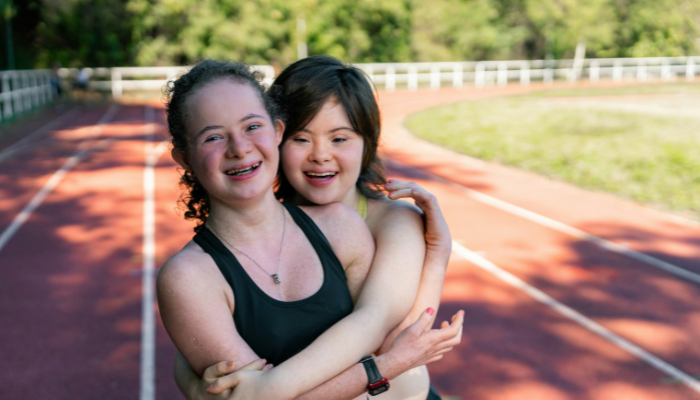
There are an estimated 4 million people with disability in Australia today – and this means there are millions of brothers and sisters around the nation with intimate experience of a rarely-discussed role: being a sibling of a person with disability.
We spoke with Siblings Australia CEO, Dr Shannon Schedlich, to learn more about sibling relationships in the context of disability, and the supports available to brothers, sisters, and families across the country.
Lifelong bonds
For better or for worse, siblings are likely to be each other’s longest-lasting relationships, and safeguarding those connections so everyone feels supported and the family dynamic thrives is vital.
That’s why Siblings Australia exists – to support, encourage and advocate for the children and adults who are often profoundly involved in the lives of their brothers and sisters.
Dr Schedlich understands this role at work and at home. Her own children became siblings of a child with disability after Dr Schedlich remarried, and their personal experience was one of the driving forces behind her decision to helm the 25-year-old organisation.
“Having seen the challenges my stepson faced with his sister, and then also becoming aware of the dynamics that exist within our family and other families, it’s very much how do you do the job to make sure everyone’s needs are met?” says Dr Schedlich.
“This is at the fore of our lives and it’s the core of my work too.”
Seeing siblings
Siblings Australia has two distinct arms – one to ensure brothers and sisters of people with disability are acknowledged in policy and practice related to disability inclusion, and the other to make direct support available for siblings themselves.
Dr Schedlich says siblings can feel invisible – not only to politicians and policy makers, but at times in their own families as well.
“We know, in certain circumstances, siblings have some complex needs,” she says. “Siblings are more likely to have their own potentially subclinical levels of disability, more likely to have suicidal ideation, more likely to have anxiety and depression than their peers who don’t have siblings with disability… but in a whole heap of policy areas there is just silence around them and their needs.”
“We also know that reflects in families – and I say this acknowledging not all families experience this, but a lot of adult siblings report being ‘the glass child’, the child whose needs are seen through.”
Dr Schedlich says it’s also damaging when a sibling with disability is seen as ‘other’ by structural systems.
“I think one of the unintended consequences of the NDIS is that it has created the person with disability as this little island within their family,” says Dr Schedlich. “They are the most important thing, and their needs are centralised, but it’s their needs outside of their foundations being supported.”
“But how do you do things out in the community or school or workplace without looking at the core piece, which is family support?
“You often see within the NDIS, that either the Agency itself or people providing support will talk about family support and what they are talking about is parent supports. They are ignoring the needs of the other children by saying 'kids are resilient, they are fine, they don’t know any different', but this attitude can be really damaging.”
But it doesn’t have to be that way.
Supporting for strength
Dr Schedlich says it’s the vision for truly recognising siblings as their own unique and important individuals that benefits the whole family and the wider community – and that includes people with disability.
“It’s very important to recognise we are talking about kids and all kids have needs and things that need to be fulfilled, regardless of what else is happening in the family,” says Dr Schedlich.
“For the overall family dynamics, when siblings are supported, the stress of the family decreases – and if we are looking across the lifespan, where Siblings Australia works, we know when siblings are seen and supported, they go on to have really fulfilling relationships with their brother or sister with disability.
“There are siblings who choose to go no-contact later in life because they feel they have been so overlooked they need to prioritise their own lives. But we also know the positive impacts that siblings have. We’ve written a white paper about this, looking at the ways that siblings are supporting the outcomes of the Australia Disability Strategy.
“Sibling relationships are so vital for people with disability because it’s often one of the few horizontal relationships people with disability have, where they are genuinely recognised as equals with their own identity.
“Siblings often see their brother or sister with disability from a strength-based perspective – what they can do – and as a sibling, not a person with disability.
“There are incredible flow-on effects for people with disability when siblings are supported. If you have a really strong family unit there's so much benefit to your wellbeing.”
In fact, Dr Schedlich says positive and strong sibling relationships become even more important as people grow into adults.
“Later in life, from a safety perspective, having engaged siblings once Mum and Dad age out means you have that set of eyes on you, so you’re safer. That’s the reality. It’s a protective relationship.”
When responsibility shifts
It’s often understood that as parents age and siblings develop into adults, they will take on more responsibility for their brother or sister with disability.
Sometimes this happens gradually and can be planned for. At other times, there’s a crisis and siblings have to step up, fast.
That’s why Siblings Australia has developed SibPlan – a free planning and support resource to help siblings to understand, support and plan for their brother or sister’s needs, now and in the future.
“Whether it’s doing future planning stuff or they’re saying, ‘I don’t know where to start’, SibPlan lays it out,” says Dr Schedlich. “It’s centralised through life goals and helps navigate through.”
“I always say to adult siblings, it’s not the disability that is overwhelming, it’s the systems that sit around the disability that can be overwhelming.”
There’s also SibChat, a moderated, online Facebook group that connects siblings of people with disability to a community where they can draw on the experiences and support of other siblings.
Tips for parents
It’s often said that parenting is about understanding which balls can be dropped because they’re durable plastic, and which balls must be caught because they’re fragile glass.
Siblings Australia certainly understands this.
Dr Schedlich says parents of children with disability have a lot to juggle, but she believes it’s vital siblings receive care and attention as well.
Here are six quick tips on how to manage the juggle:
1. Check you're not missing something
As disability can have a genetic component, there’s a chance other siblings may also share the same disability, albeit with lower support needs.
“If you have one child with significant support needs, it can be easy to overlook the child who seems to be travelling okay,” says Dr Schedlich.
“Check whether other siblings have potential diagnoses that haven’t been addressed.”
2. Be aware of higher rates of poor mental health in siblings of children with disability
A 2018 study by Siblings Australia revealed 66 per cent of adult siblings reported having anxiety, 54 per cent reported depression, and 84 per cent revealed family stress.
3. Understand and show up for your children
Dr Schedlich says it’s important you’re present when it really matters to your children.
If you have a soccer-obsessed child, make sure you can make it to the sidelines as often as possible, or for an academically-focused child, be at assembly when they’re receiving a Principal’s Award.
You can take time with their interests, setting aside 1:1 time to talk Pokemon, have a go at gaming, or even enjoy a walk together.
“Kids are really understanding, they get there is a whole raft of things going on, but they also need to know the things that matter to them matter to their parents,” says Dr Schedlich.
4. Embrace your village
For the times when you can’t be there, if aunties, uncles, or friends-who-are-chosen-family can be there for siblings, it really helps.
“It’s equally important for the sibling-child to have their village too,” says Dr Schedlich.
5. Don't parentify brothers and sisters – let kids be kids
This is important at school as well! Ensure siblings aren’t being pulled out of their own classes to provide support to their brother or sister with disability and do your best to preserve the relationships between siblings.
6. Know where to seek support
Family doctors and school counsellors can be good resources for your children, and Carer Gateway also offers phone counselling that may be suitable.
Siblings Australia can support siblings with counselling too – either individually or as part of a family.
Contact SibSupport for more information.
Recent posts
18 February 2026
28 January 2026
26 January 2026
29 September 2025
You may also like...

Your options if your NDIS access request is rejected
What happens if your NDIS access decision doesn’t go your way? We explore next steps and options.
The true cost of caring
Informal carers have an enormous and positive impact on the nation. But at what cost?
Consent and the NDIS
If you’re a participant in the NDIS, before anyone can see information about you or make decisions on your behalf, they need your consent.
Psychosocial disability explained
The term ‘psychosocial disability’ can be misunderstood or confusing to those who’ve never heard of it. So, what does it mean?