
10 disability buzzwords and what they mean
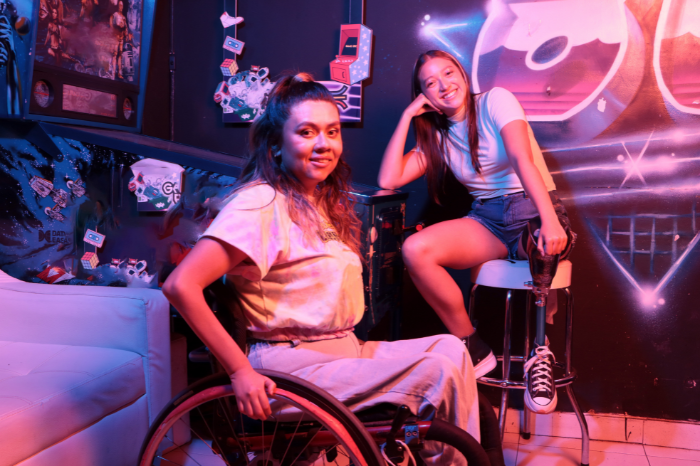
Are you neurospicy, like a Mexican fiesta? Do you have diverse-ability? Or perhaps you mask or camouflage your disability or traits?
How we talk about disability matters, because it creates a frame of reference through which we and others see it.
A positive frame of reference can remove the walls that have boxed people with disability into one narrative and instead create limitless possibilities.
And having a vocabulary that can express and convey our thoughts and ideas about disability better has the power to do that - times 10!
That’s why we like these 10 buzzwords that are levelling up the disability narrative and creating a world that’s more inclusive through better expression.
1. Ableism
Ableism is discrimination against people with disability. We like to believe that people who are ableist are in the minority and on the decline, thanks to more education, more inclusivity, and more positive representation of disability – but there’s still a way to go, especially in the workforce.
In situ: We will not tolerate ableism in this community.
2. Allistic
Also known as nypical, this word refers to all non-autistic people – including neurotypicals and non-autistic neurodivergent people.
In situ: I am allistic.
3. AuDHD
When a person has autism and ADHD combined. This is a relatively new word because, before circa 2013, the concept of a person being diagnosed with both wasn’t recognised in the mainstream system.
In situ: James had AuDHD as a child, but at the time it wasn't recognised.
4. Disability pride
Being proud of who you are and embracing your disability. It can also mean feeling confident and not hiding it.
In situ: July is Disability Pride Month.
5. Diverse-ability
A person with a learning diverse-ability finds learning more difficult, which doesn’t make them less able, they may just need a little extra support in the area where they have it.
In situ: I have a reading diverse-ability called dyslexia.
6. Intersectionality
Recognises that different identity traits like ‘woman’ and ‘disability’ don’t exist independently and can mesh to impact them and shape their experiences. For example, a cisgender, black, disabled student and a queer, white, disabled student may have very different experiences of disability discrimination because of the multiple identities they carry.
In situ: How can intersectionality help us understand diverse experiences?
7. Masking or camouflaging
Where people conceal certain traits and replace them with neurotypical ones to avoid being recognised as neurominorities – e.g., by changing tone of voice, body language, eye contact, speech patterns etc, to match the dominant social norm and avoid negative consequences.
In situ: She masked her disability.
8. Neurodivergent
A blanket word for ways of thinking or experiencing the world that are different from what’s considered ‘typical’. Everyone’s brain works differently and therefore people think and experience the world differently too. A person on the autism spectrum, or someone with ADHD, dyspraxia, Tourette Syndrome, and other diagnoses may identify as neurodivergent.
In situ: A report claims that approximately 20 per cent of high school students in Australia are neurodivergent.
9. Neurospicy
A different word for neurodivergent – and one we've only just heard about ourselves!
In situ: I’m a neurospicy writer.
10. Person-first vs Identity-first language
Person-first language emphasises that the diagnosis doesn’t define the person, but the person has the diagnosis (i.e. a person with autism).
Identity-first language emphasises the idea that the condition is inseparable from the person (i.e. autistic person, disabled person, blind person).
In situ: We strive to use person-first language when we talk about disability.
Recent posts
18 February 2026
28 January 2026
26 January 2026
29 September 2025
You may also like...

Your options if your NDIS access request is rejected
What happens if your NDIS access decision doesn’t go your way? We explore next steps and options.
The true cost of caring
Informal carers have an enormous and positive impact on the nation. But at what cost?
Consent and the NDIS
If you’re a participant in the NDIS, before anyone can see information about you or make decisions on your behalf, they need your consent.
Psychosocial disability explained
The term ‘psychosocial disability’ can be misunderstood or confusing to those who’ve never heard of it. So, what does it mean?