
Deep dive into... day programs
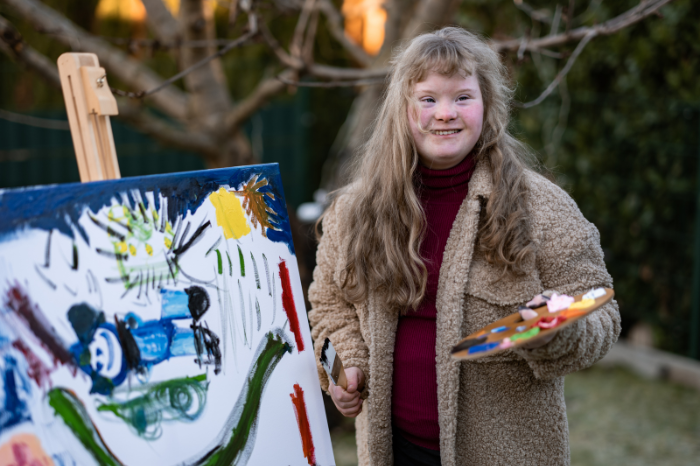
Alison Climo is relatively new to the disability sector, joining Sunnyhaven Disability Services in late 2022 after working in the aged care sector for 10 years. She shares with us what makes day programs a great option for adults with disability, how to handle challenges, and tips for finding the perfect day program for you.
Can you please tell us about Sunnyhaven’s day programs?
We offer day programs for adults with disability across two locations in Sydney and we offer a great mix of things to do where clients get something fun and engaging to choose from every day.
Our choices are always flexible and, at the moment, we’re offering a mix of art and music therapy, sports and outdoor activities, cooking and nutrition, as well as having fun, like going to the movies.
What does a typical day look like?
Everyone arrives at the centre, excited to see which staff member they’ve been linked with. They look for their picture and see who their staff member is.
Then, we do morning tea, then it’s time for different activities. It could be swimming, going to see a movie, going to the park, music or art – it depends on what they want to do for the day.
We have a lovely outdoor area, so when everyone returns, often some people will go out and play soccer and hang around with friends, while other people might come in and do art, or just relax and chat.
We really try and create a home-away-from-home environment where people feel comfortable to be exactly who they are. That means people are free to choose to stay in the centre if they want to – today, we had people going out on buses, but one person didn’t want to go, and then we ended up having a few people staying back.
It means that, as an organisation, we need to be really flexible and responsive to people’s needs, but that’s our job and we’re glad to be able to do that.
How did you come to work in the disability sector?
I’d been working in aged care for close to a decade and I had always wanted to work in disability.
I was diagnosed with cancer two years ago and I took two years off work to fight it. Then this job opportunity came up and my friend said: ‘You need to go for it - get out of your comfort zone and give it a go.’, and I’m so glad that I did. I absolutely love it.
What are the best things about your work?
The best thing is knowing that you’re making a positive difference in someone’s life, it’s just incredible.
I love witnessing our clients grow and develop, especially the social side and the friendships, watching people establish a community and connections outside of their own family.
What are the challenging aspects?
I would say finding the right staff can be challenging because it’s so important. You need to find the right staff to work with the clients to do the things that clients want to do.
It’s also about working to support client choices – I’ll allocate staff to certain clients but then the client will want to work with a different staff member or do a different activity. We need the right staff who understand our clients’ different behaviours and needs and how to best support them.
We work alongside people with physical and intellectual disability, so we have staff who need to have qualifications in supporting people with behaviour management plans, manual handling plans, and the list goes on.
Our commitment to flexibility does make our work challenging but it’s a great challenge to have.
How does someone get day programs funding in their NDIS plan?
For a new plan, speak to a planner or your local area coordinator, set some goals in place that you want to achieve, and perhaps speak to a plan manager or support coordinator for help in finding some programs to choose from. Then you can find day programs that might align with your goals and the program can help you achieve those goals.
Some goals that our clients have that align with what we offer in Sunnyhaven’s day programs include hydrotherapy and learning to use their own money – so, paying for things and getting receipts. Others want to learn to read and write, and we even had a client who wanted to lose weight and improve their health. She has been able to lose five kilograms in the past three months and she is so excited – so are we to see someone set a goal and achieve that goal! She’s achieved it through lots of hard work and willpower.
Everyone’s always looking to get the best value for money from their NDIS plan – understandably! What are your tips so participants can stretch their plan funding and their personal budgets further?
Look at the day program’s activities, see what they are doing, and see what mix of in-house versus outward activities they’re doing.
The way we’re careful with our clients’ budgets is to draw on the skills of our staff – for example, we have a staff member who’s really skilled at soccer, so we’re starting a soccer group. We’ll take our own goals, shirts and other equipment to a local park and start our own league.
We’ll match staff who enjoy fishing with clients who want to fish – that way, it’s a lower cost, rather than chartering a fishing boat every time! And we’ll engage staff who are passionate about cooking to lead our cooking and nutrition programs.
Having said that, we’ll bring in professionals when we need to as well, for example with music therapy.
Another way that day programs can help with stretching your plan funding is with increased participant to staff ratios. If it’s suitable for you, having two or three participants working with one staff member, rather than 1:1, can be a way to stretch your budget if it suits your needs and level of support.
What’s an assumption about day programs that people get wrong?
When you say you work in day programs, I think a lot of people assume it’s all just fun times and easy work, but it’s not. It takes a lot of work and dedication to support someone with disability, get to know and understand what motivates them, and continuously work to find new and engaging activities that align with their goals.
That’s not to say we don’t have fun – we really do, and I love my work – but there’s a huge level of responsibility. We’re caring for people’s children, their family members, we’re responsible for their safety and their path to their goals.
We also work with clients at the high points and the low points of their lives, and that can be really hard. To do this job well you have to be empathetic and so it’s only natural that we feel sadness when they are sad, missing their family or grieving someone they love.
What advice do you have for someone who wants to work in the disability sector, especially in day programs?
Give it a go, sometimes you have to push yourself and get outside of your comfort zone. You have your training to fall back on, but once you start working alongside clients, you’ll really understand the highs and lows of working in the sector – but you don’t know what you’re capable of until you try it.
I find that once staff are working in day programs they don’t want to leave! Our program is really personal, and we get to spend a lot of time with clients – we form our own little community. And, best of all, we get to witness our clients grow and develop in confidence and independence – it’s the most rewarding job in the world!
What do you love to do outside of work?
I’m a grandmother and I love spending time with my family, my children and grandkids. I’m also a bit of a nerd, I love playing video games a lot!
Recent posts
18 February 2026
28 January 2026
26 January 2026
29 September 2025
You may also like...

Leaning into the chaos: travelling as a neurodivergent family
We asked a neurodivergent mum to share her travel tips and holiday experiences.
Meet Charlotte
Welcome to a series of stories showcasing our wonderful community. Charlotte’s an affectionate young girl who likes school, swimming and cuddles from her mum, Kylie.
10 years. 10 clients. 10 stories.
As we wrap up our 10th year of service in the NDIS, we want to shine a light on those who’ve made it all possible – our incredible clients and the wider disability community – and thank you for inviting us into your lives.
Meet Jasmine
Welcome to a series of stories showcasing our wonderful community. Jasmine is a caring person who’s taking steps towards her future.